
Table of Contents
ToggleIn a world where traffic jams feel like a rite of passage and public transportation schedules seem to have been written by a mischievous cat, cities are turning to transportation tech for a much-needed makeover. Imagine a future where getting from point A to point B is as smooth as butter on warm toast. With innovations like smart traffic lights and electric scooters, urban commuting doesn’t have to be a daily headache.
Cities are embracing technology to tackle congestion, reduce emissions, and enhance mobility. From apps that predict bus arrivals to autonomous vehicles that promise to revolutionize our streets, the future of urban transport is not just bright; it’s downright dazzling. Buckle up as we explore how these advancements are reshaping city life and making it easier, faster, and—dare we say—more fun to navigate the urban jungle.
Overview of Transportation Tech for Cities
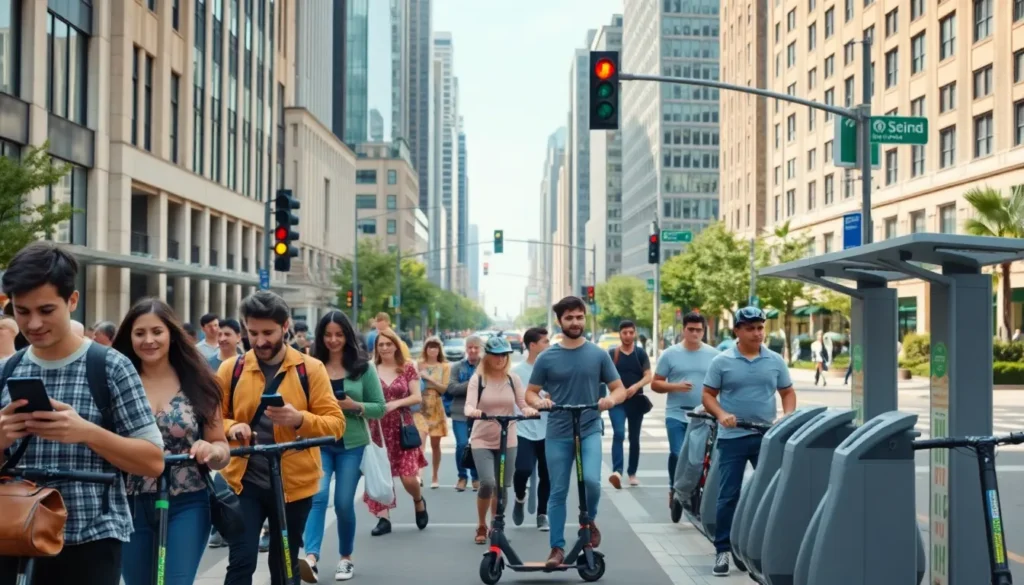
Cities adopt transportation technology to enhance urban mobility and address challenges such as traffic congestion and inconsistencies in public transport. Smart traffic lights optimize vehicle flow by adapting to real-time conditions. Electric scooters provide convenient alternatives for short-distance travel, encouraging eco-friendly commuting options.
Innovative apps that predict bus arrivals allow residents to plan their journeys more effectively. Real-time data on public transport enables users to minimize wait times and improve travel experience. Furthermore, integrated payment systems simplify fare collection across multiple transportation modes.
Autonomous vehicles are making strides on city streets. These vehicles promise reduced accidents and improved traffic management when incorporated into existing infrastructures. Dedicated lanes for ride-sharing services enhance efficiency by separating high-occupancy vehicles from standard traffic.
Emerging bike-sharing programs foster healthier lifestyles while promoting the use of sustainable transport. Connectivity between different modes of transport facilitates seamless transitions from bikes to buses or trains. Smart parking solutions utilize sensors and mobile apps to guide drivers to available spots, minimizing search times and congestion.
Mobility-as-a-Service platforms consolidate various transport options into single accessible apps, giving users greater flexibility in how they travel. Advanced analytics track usage patterns, enabling city planners to make data-driven decisions and optimize transport networks.
Collectively, these technologies reshape urban landscapes, improve the quality of life, and boost economic productivity by fostering more efficient and reliable transportation systems.
Innovative Solutions in Urban Transport
Cities are embracing cutting-edge technologies to enhance urban transportation. These innovative solutions promise to streamline travel and address common challenges faced by commuters.
Smart Traffic Management Systems
Smart traffic management systems significantly optimize traffic flow. These systems utilize real-time data to adjust traffic signals, reducing congestion during peak hours. For instance, adaptive signals implement changes based on current traffic conditions, leading to shorter wait times. Additional sensor technology monitors vehicle and pedestrian interactions, enhancing safety at intersections. Vehicle-to-infrastructure communication further improves efficiency, allowing vehicles to receive updates on road conditions. Overall, these systems contribute to smoother journeys and lower emissions.
Autonomous Public Transit Options
Autonomous public transit options transform traditional commuting experiences. These driverless vehicles offer increased safety and reduced operational costs while providing 24/7 service. Companies like Waymo and Tesla are actively testing self-driving shuttles in urban areas. Implementations indicate potential for improved accessibility, particularly for individuals with mobility challenges. Riders gain from the convenience of on-demand transit solutions that efficiently navigate routes. Ultimately, these advances reflect a shift toward more inclusive and efficient urban transport systems.
Impact on Urban Mobility
Transportation technology significantly transforms urban mobility, creating more efficient systems that enhance the everyday commuting experience. Innovations improve accessibility and reduce traffic woes, fostering better urban environments.
Enhancing Accessibility for All
Transportation technologies promote inclusivity by enabling diverse user groups to access mobility resources. Autonomous vehicles improve options for individuals with disabilities, offering on-demand services that cater to specific needs. Bike-sharing programs provide a low-cost alternative, encouraging healthier lifestyles and broadening commuting choices. Mobility-as-a-Service platforms consolidate transport options, allowing users to plan trips seamlessly. Public transit systems integrate real-time updates, ensuring commuters receive crucial information about schedules and delays. Enhanced connectivity between services and communities makes urban environments more navigable for all.
Reducing Traffic Congestion
Smart traffic management systems employ real-time data to optimize traffic flow and minimize delays. Traffic lights adjust based on current traffic conditions, significantly enhancing safety at intersections. As a result, emissions decrease, contributing to a cleaner urban atmosphere. Transportation apps offer users insights into traffic patterns, empowering them to choose less congested routes. These technology-driven solutions improve travel times, making daily commutes faster and more reliable. Investments in smart infrastructure lead to long-term benefits, reducing overall congestion and enhancing the quality of urban life.
Environmental Considerations
Cities must consider environmental impacts when integrating transportation technology. Developing sustainable transportation systems proves essential for reducing carbon footprints and enhancing urban air quality.
Sustainable Transportation Initiatives
Sustainable transportation initiatives play a crucial role in shaping cities. Many cities adopt bike-sharing programs and pedestrian-friendly infrastructures to encourage eco-friendly commuting. Public transit systems that utilize electric buses and trams significantly lower emissions. These initiatives not only promote a healthier lifestyle but also alleviate congestion. Cities leveraging smart mobility solutions help optimize routes and enhance the overall efficiency of public transport.
Electric and Alternative Fuel Technologies
Electric and alternative fuel technologies offer innovative solutions for urban transportation. Electric vehicles (EVs) significantly reduce greenhouse gas emissions compared to conventional vehicles. Many cities invest in charging stations, making EV use more convenient for residents. Hydrogen fuel cells also present a viable alternative for public transit systems, reducing reliance on fossil fuels. Implementing these technologies supports the transition to cleaner transportation while enhancing urban air quality.
Challenges and Considerations
Cities face various challenges when integrating transportation technology. Significant issues include infrastructure limitations and data privacy concerns, which can hinder the effectiveness of innovative solutions.
Infrastructure Limitations
Infrastructure gaps pose a barrier to the implementation of advanced transportation technologies. Many urban areas lack necessary updates to accommodate innovations like smart traffic systems or electric vehicle charging stations. Insufficient public transport systems also complicate the integration of Mobility-as-a-Service platforms. Aging roads and congested networks can detract from the effectiveness of these new technologies, resulting in limited adoption by the public. Urban planners need to prioritize infrastructure improvements to support seamless transitions to smart transportation solutions.
Data Privacy and Security Issues
Data privacy and security remain pressing concerns for transportation technology. Collecting personal information from users can expose sensitive data to breaches. Many citizens worry that their travel patterns might be monitored, leading to potential misuse. Additionally, the use of real-time data needs secure protocols to prevent hacking, which can compromise both user safety and trust. Addressing these challenges requires rigorous regulations and robust security measures to protect individuals while leveraging data to enhance urban mobility.
Transportation technology is revolutionizing urban mobility and reshaping city life. By integrating smart systems and innovative solutions, cities can tackle traffic congestion and improve public transport reliability. The rise of electric vehicles and sustainable commuting options reflects a commitment to enhancing air quality and promoting eco-friendly practices.
As cities embrace these advancements, they must also address infrastructure challenges and data security concerns. Balancing innovation with safety and privacy will be crucial in creating inclusive transportation systems. Ultimately, the future of urban commuting looks promising as technology continues to pave the way for more efficient, enjoyable, and sustainable travel experiences.


